✍️Dr.Ashma

4. Melting Himalayan glaciers and GLOFs affect India, Northeast India, and neighbouring Himalayan nations?
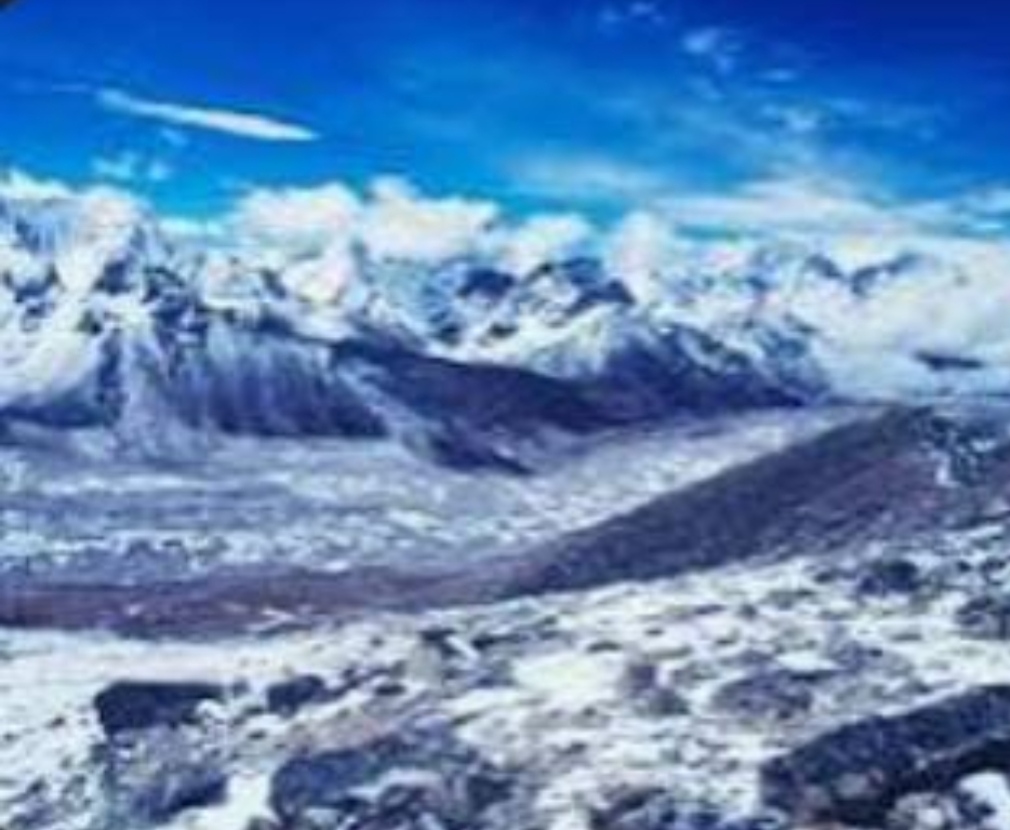
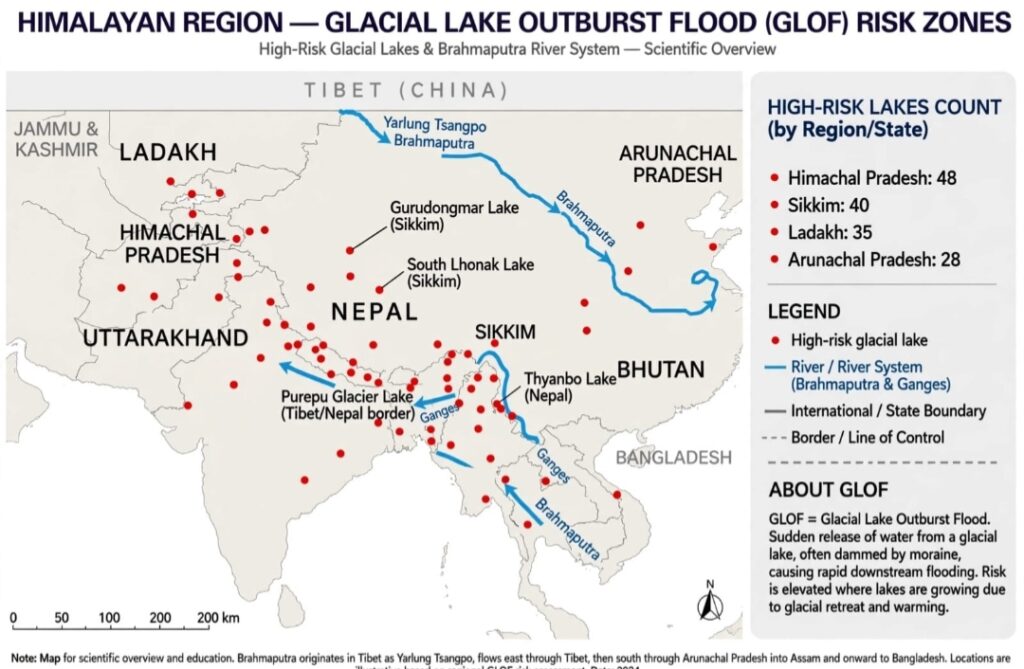
While Nepal is the epicentre, the hazard is pan-Himalayan. India alone has ∼7,500 glacial lakes in the Himalayan region, with 190 officially classified as ‘high-risk’ by NDMA.

A) For India – A national risk
- Population at risk: A global assessment in Nature Communications found India and Pakistan together account for 1/3rd of all people globally exposed to GLOFs. In India alone, ∼3 million people live in vulnerable valleys across 6 states/UTs: J&K, Ladakh, Himachal, Uttarakhand, Sikkim, Assam and Arunachal Pradesh.
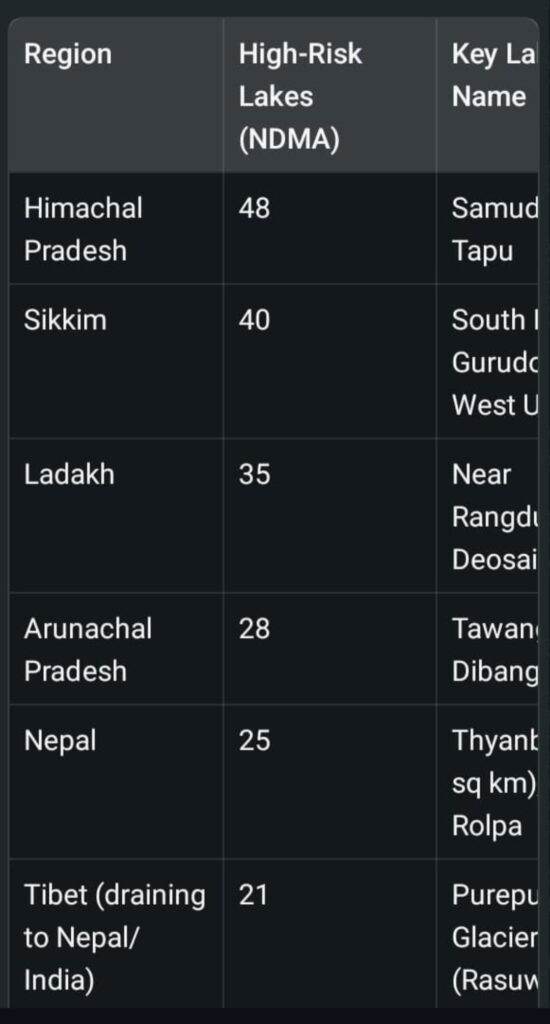
- Where the risk is highest: Of the 190 high-risk lakes, Himachal has 48, Sikkim 40, Ladakh 35, Arunachal 28, J&K 26 and Uttarakhand 13. IIT Ropar study of 851 lakes classified 50 as “very highly hazardous” — including West Upper Gurudongmar Lake (Sikkim), 2 lakes in Tawang (Arunachal), Samudra Tapu (Lahaul-Spiti), and lakes near Rangdum/Deosai (Ladakh)
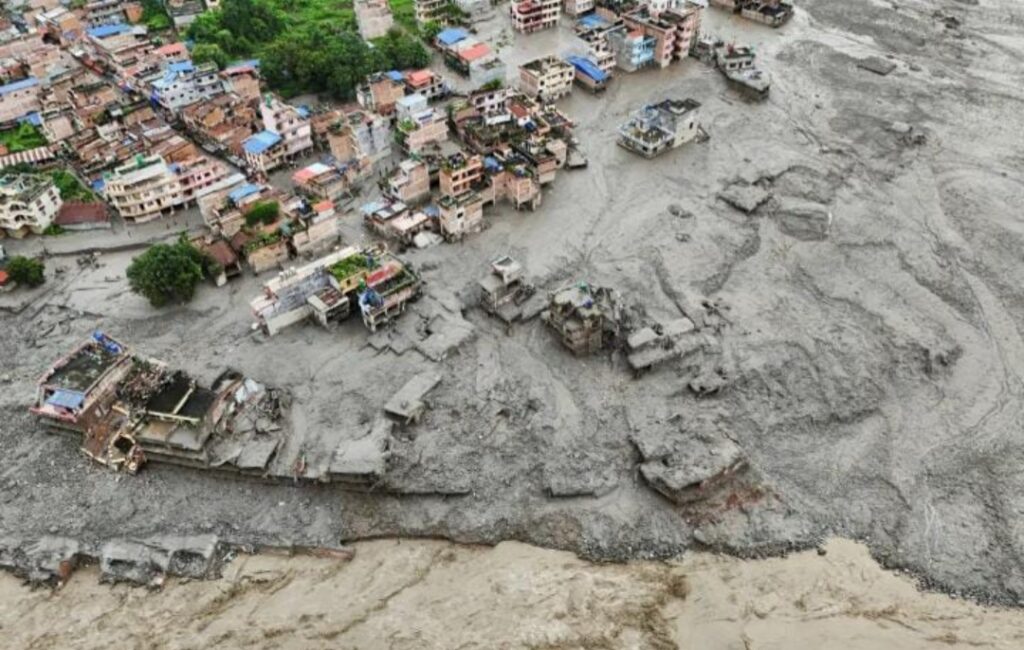
.- Precedent – South Lhonak, Sikkim (Oct 2023): The breach of South Lhonak Lake killed 55+ people, destroyed Chungthang Dam (Teesta-III, 1200 MW) and washed away 30+ bridges. It became the trigger for NDMA’s Rs 150 crore GLOF Mitigation Programme.
B) For Northeast India – The downstream amplifier
Northeast is not just a source of GLOFs, it is the sink for transboundary floods.
- Arunachal Pradesh as source: NDMA has identified 27 high-risk lakes in Arunachal alone — Tawang (6), Dibang Valley (16), Anjaw (3). These feed into the Lohit, Dibang and Subansiri — all tributaries of the Brahmaputra.
- Assam as receiver: A GLOF in Arunachal/Tibet does not stay in the mountains. Water + debris travels up to 40km+ downstream as per studies, choking hydropower reservoirs, raising Brahmaputra’s sediment load, causing flash floods in Dhemaji, Lakhimpur, Dibrugarh, and destroying embankments. This is why Assam is included in NDMA’s GLOF vulnerable states despite having no glaciers.
- Chain reaction risk: A GLOF can trigger landslide-dammed lake outburst floods (LLOFs) downstream — as seen in Sikkim where the initial lake burst triggered secondary dam collapses all along Teesta.
C) For Neighbouring Countries – A Transboundary Crisis
- Bhutan: Similar to Nepal — 25 dangerous lakes, with Punakha-Wangdue valley repeatedly threatened (1994 Lugge Tsho GLOF). Bhutan’s hydropower revenue model (75% of exports to India) is directly exposed.
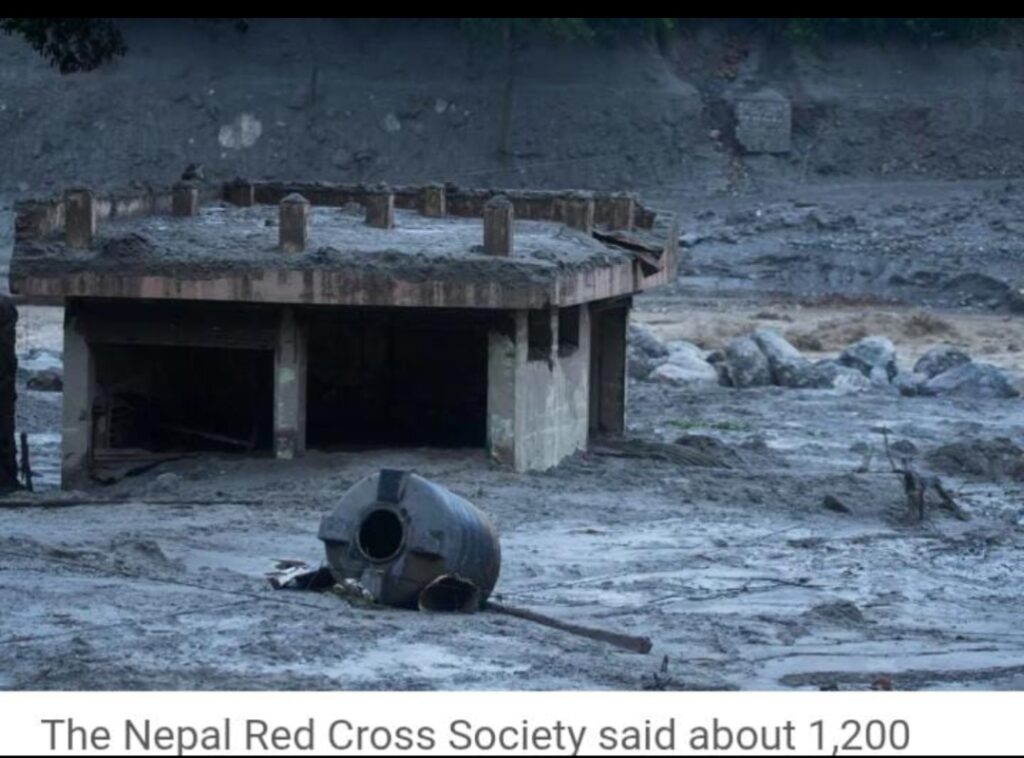
- China (Tibet): Source of 21 dangerous lakes that drain into Nepal, plus 636 transboundary lakes that can flood the Indian Himalayan Region. The 8 July 2025 Rasuwa event originated in Tibet but destroyed Nepalese infrastructure — highlighting the early-warning vacuum.
- Bangladesh: End receiver of Brahmaputra/Jamuna. While not facing direct GLOF waves, it faces the final surge of flood volume and sedimentation, impacting chars, agriculture and the Jamuna Bridge infrastructure.
- Key Stats for Caption:
- Total Himalayan glacial lakes: ∼7,500
- India population exposed to GLOF: ∼3 million (India + Pakistan = 1/3rd of global exposure)
- Ice loss: Nepal lost 1/3rd ice in 30 years, melting 65% faster in last decade
- New risk: Lakes <0.02 sq km now causing 35km downstream destruction — invisible to free Landsat/Sentinel-2
- Recent damage: Bhote Koshi 2025 – 8% of Nepal’s power lost, 4 hydropower plants + Friendship Bridge

#Glacier
#Climate & Development #NorthEastIndiaFocus
#DailyClimate #ClimateFinance #NorthEastIndia
#TheHimalayanBelt #ClimateResilientDevelopment #ArunachalPradesh #Assam #WaterSecurity #WorldBank #ADB
About the Author